


EMDR Therapy & Trauma Recovery in Marin County
Transform your relationship with EMDR therapy
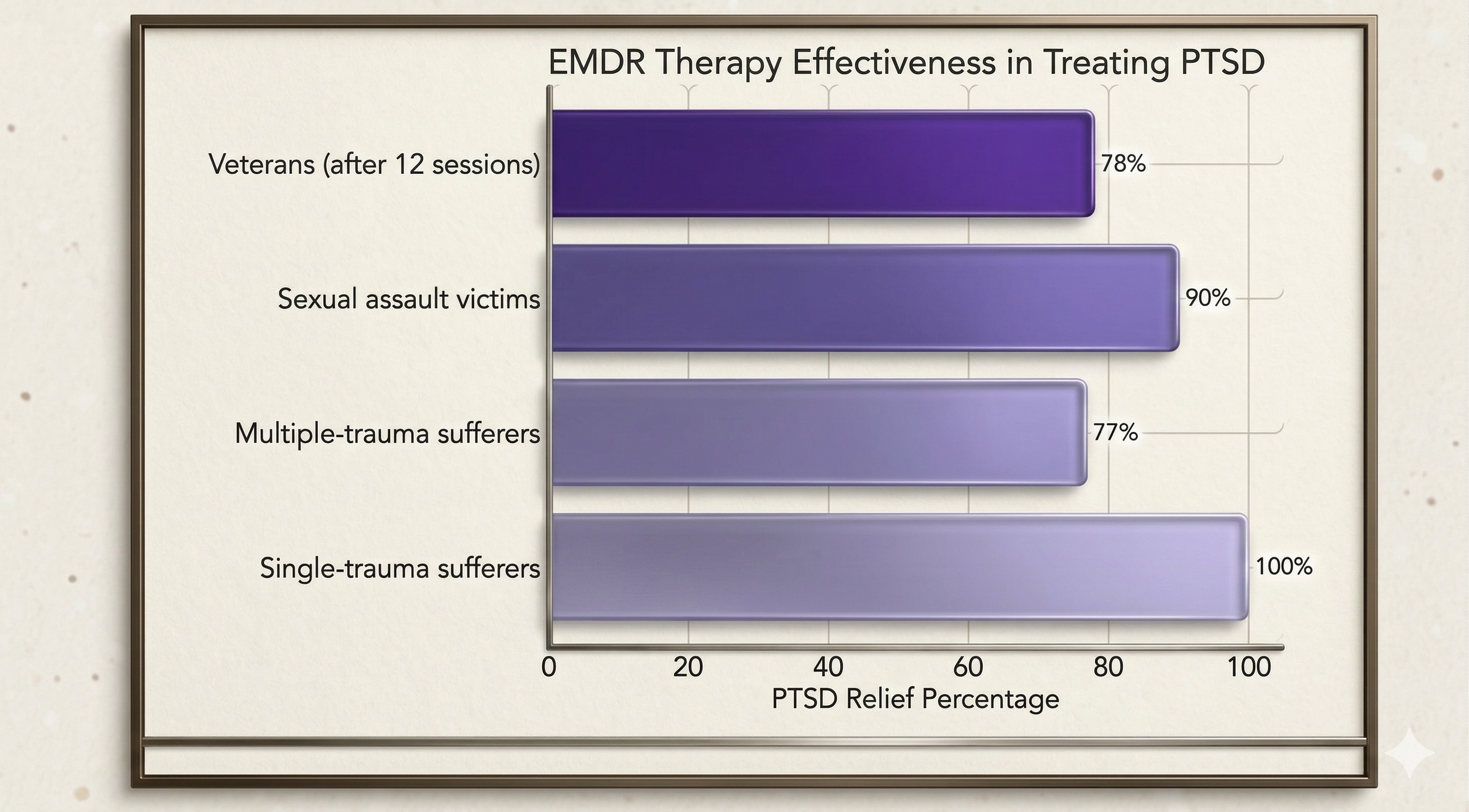
EMDR stands out as the most effective treatment for trauma. Studies show EMDR produces 85% symptom reduction, outperforming CBT (75%) and medication (55%). Unlike medication, which only manages symptoms, EMDR helps reprocess traumatic memories for lasting healing. This evidence-based approach allows individuals to experience significant relief in fewer sessions, making it a powerful tool for trauma recovery and couples therapy.
“Changing the memories that form the way we see ourselves also changes the way we view others. Therefore, our relationships, job performance, and what we are willing to do or are able to resist, all move in a positive direction.”

Healing from the Past, Strengthening Your Future
Emotions, memories, and past experiences shape how we show up in relationships. When unresolved trauma or distressing experiences influence how we connect with our partner, it can create patterns of conflict, emotional disconnection, or distress. Eye Movement Desensitization and Reprocessing (EMDR) therapy is a powerful, evidence-based approach designed to help individuals and couples process past wounds, reduce emotional reactivity, and foster healthier, more secure relationships.
What is EMDR Therapy?
EMDR therapy is a structured, research-backed approach that helps the brain reprocess distressing memories so they lose their emotional intensity. Unlike traditional talk therapy, EMDR does not require extensive discussion of past events; instead, it uses bilateral stimulation (such as eye movements or tapping) to help the brain reprocess painful memories in a more adaptive way.
For couples, EMDR therapy can be particularly effective in addressing:
- Unresolved trauma from past relationships or childhood experiences
- Emotional triggers that lead to recurring conflicts
- Attachment wounds that impact trust and security
- Betrayal, infidelity, or relationship distress
Why is EMDR Therapy Important?
Research has shown that unprocessed trauma can be stored in the nervous system, leading to heightened emotional reactions, avoidance behaviors, and negative relationship patterns. EMDR helps release these stored responses, allowing individuals to feel more present and connected in their relationships.
Multiple studies support the effectiveness of EMDR, including research published in the Journal of Clinical Psychology, which found that EMDR significantly reduces symptoms of PTSD, anxiety, and distress in fewer sessions than traditional talk therapy. Additionally, studies in the Journal of Marital and Family Therapy highlight the benefits of EMDR in improving emotional regulation, reducing relational conflict, and fostering secure attachment in couples.
How EMDR Can Help Your Relationship
In a relationship, unhealed wounds (whether from childhood, past relationships, or within the partnership itself) can shape emotional reactions and communication patterns. Through EMDR, couples can:
Identify and heal emotional triggers that contribute to conflicts
Reduce reactivity and increase emotional regulation in difficult conversations
Strengthen trust and attachment security by processing past wounds
Develop a deeper sense of emotional safety and connection
Take the Next Step Toward Healing
You don’t have to let past experiences dictate your relationship’s future. EMDR therapy offers a path toward healing, allowing you to engage with your partner from a place of calm, clarity, and connection.
If you’re ready to explore how EMDR therapy can support your relationship, we would love to help. Contact us to learn more or schedule a consultation. For rates, see our fees & policies page.
Frequently Asked Questions
-
EMDR (Eye Movement Desensitization and Reprocessing) is an evidence-based therapy that helps the brain process traumatic memories and reduce their emotional intensity. EMDR uses bilateral stimulation, such as eye movements or tapping, to help the nervous system safely reprocess difficult experiences and create healthier emotional responses.
-
EMDR therapy can help individuals and couples who are struggling with trauma, anxiety, emotional triggers, painful memories, relationship wounds, and experiences that continue to affect their present life. It is commonly used for trauma recovery, PTSD symptoms, betrayal trauma, and emotional distress.
-
EMDR may be helpful if past experiences continue to influence your emotions, relationships, or sense of safety. Many people seek EMDR when they experience recurring triggers, intense emotional reactions, anxiety, shame, or difficulty moving forward after painful events.
-
Kodo Couples Therapy provides EMDR therapy in Novato, Marin County, serving individuals and couples throughout the Bay Area. Our practice is located at 7250 Redwood Blvd Suite 300, Novato, CA 94945.
-
No. EMDR does not require you to describe every detail of a traumatic experience. The therapy focuses on helping your brain process the emotional impact of memories in a safe and structured way rather than repeatedly reliving painful events.
-
The timeline varies depending on the type of trauma, emotional history, and individual goals. Some people notice changes within several sessions, while more complex trauma may require longer-term support. Your therapist will create a pace that feels safe and appropriate for your needs.
-
Yes. EMDR can be helpful for relationship-related trauma, including betrayal, infidelity, attachment wounds, and experiences that create fear or emotional disconnection. Processing these experiences can help individuals and couples rebuild emotional safety and improve connection.
-
Traditional talk therapy often focuses on discussing thoughts, feelings, and experiences. EMDR focuses on helping the brain reprocess distressing memories so they become less emotionally overwhelming. Many people find EMDR helpful when they understand their experiences intellectually but still feel strong emotional reactions.