

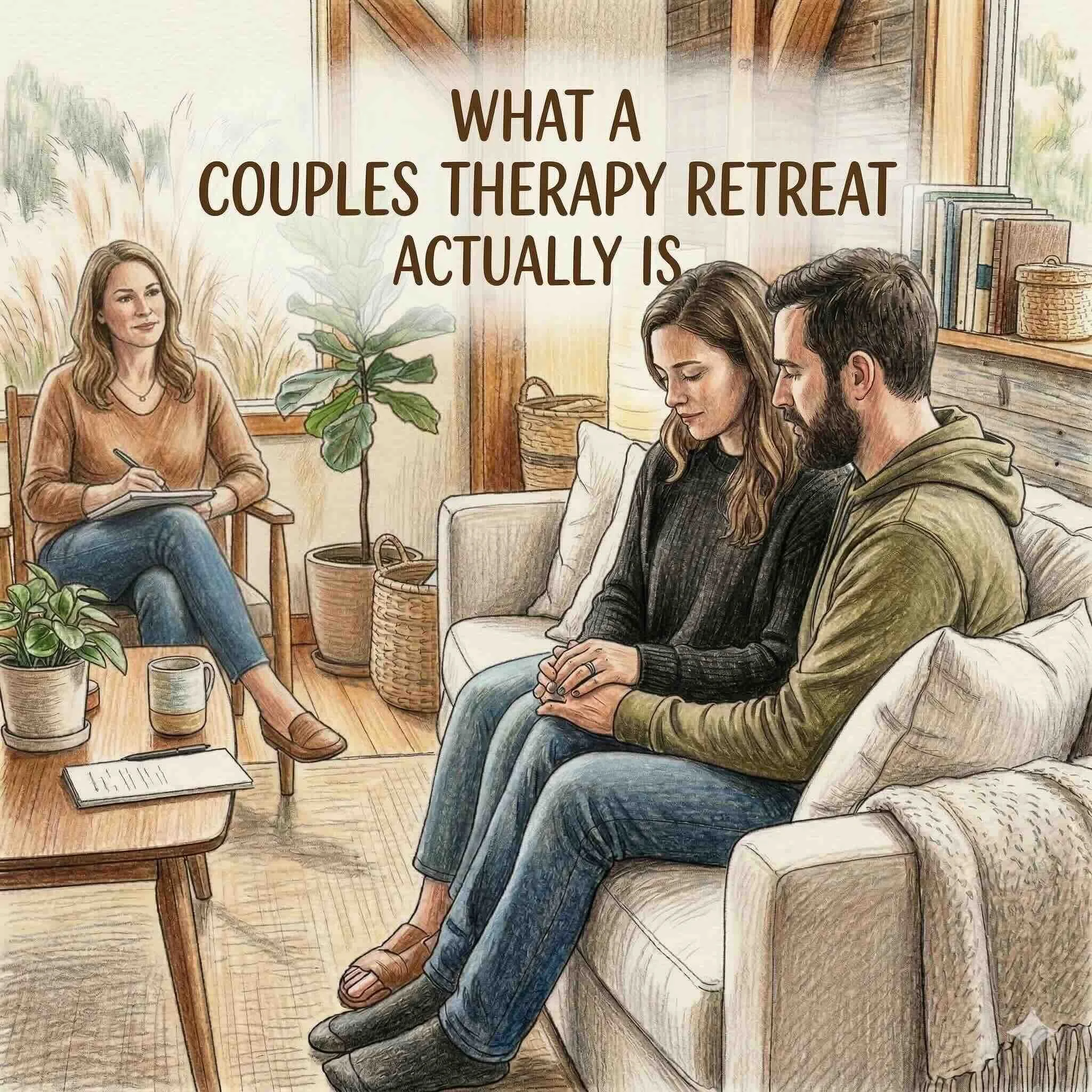
What a Couples Therapy Retreat Actually Is, And How to Know If You Need One
There's a particular exhaustion that settles into a relationship when both partners are trying: attending sessions, reading the books, doing the work, and still finding themselves in the same argument on a Tuesday night. Not from lack of love, but because the structure of how they're working on the relationship isn't matching the depth of what needs to shift.
This is usually when couples start searching for something different. A couples therapy retreat, or maybe a couples intensive. Whatever you call it, the impulse is the same: we need more than an hour a week.
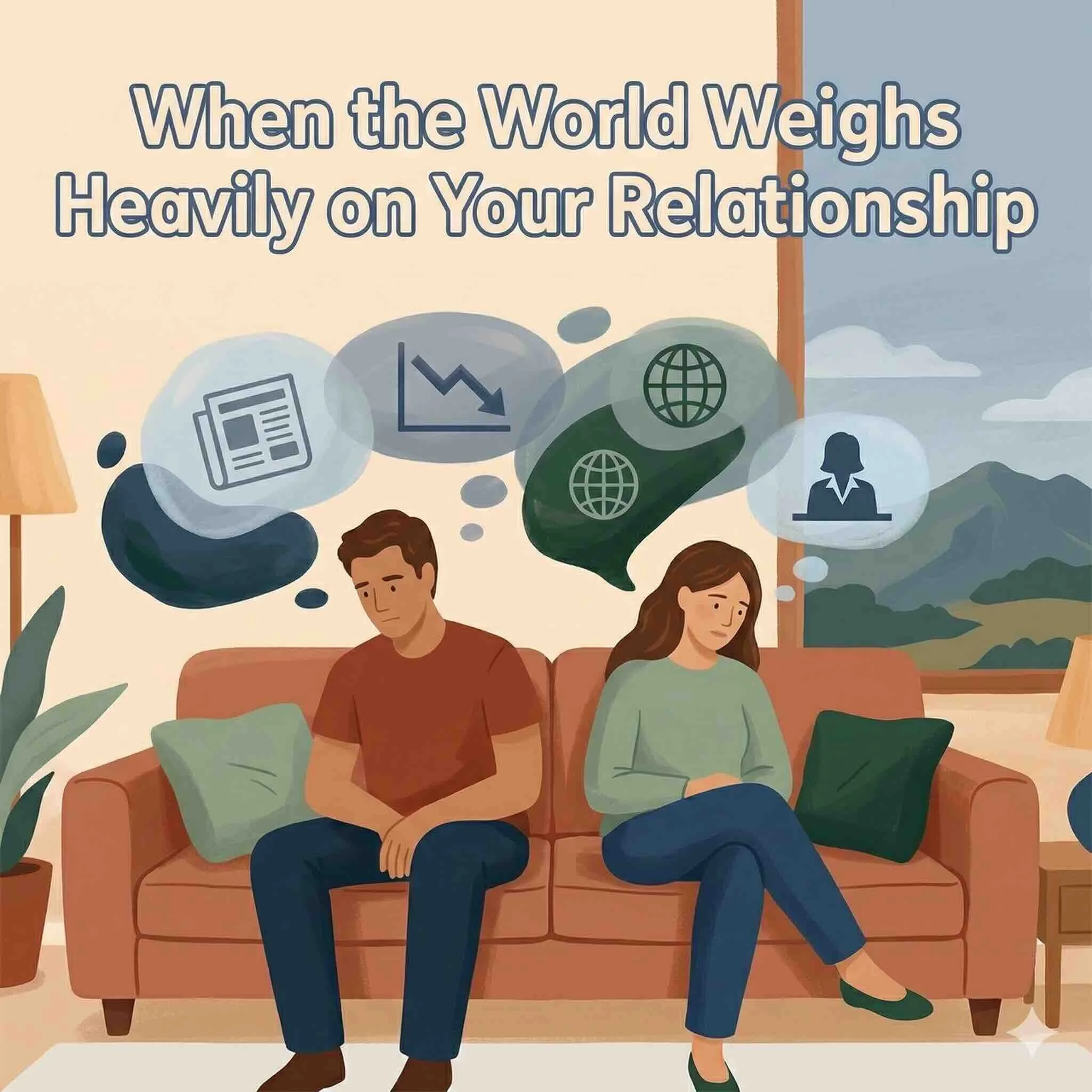
When the World Weighs Heavily on Your Relationship
Many couples in Marin County and the Bay Area have noticed a confusing shift: their relationships suddenly feel harder, even when nothing has changed at home. Instead of feeling like a sanctuary, your partner starts to feel like another source of stress. When irritability and distance replace genuine connection, even small disagreements can spiral into long, draining tensions.
Often, the issue isn't the relationship itself, but the unstable global climate we are navigating. As our nervous systems quietly absorb political or economic pressure, we tend to vent that internal strain at home, the one place where we feel safest being vulnerable.
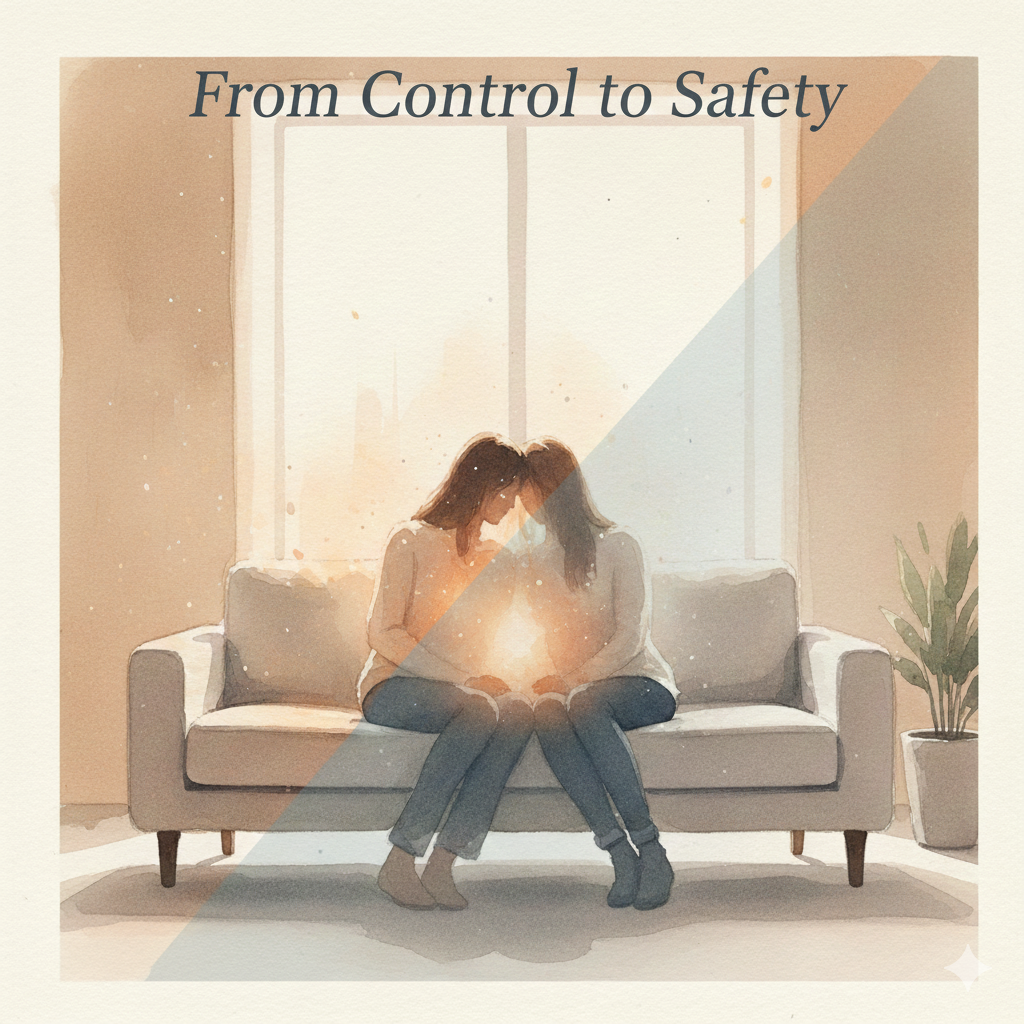
When “Safety” Turns Into Control: The Invisible Cost of Relationship Management
Most people who become controlling in their relationships do not experience themselves as controlling.
They experience themselves as trying to feel safe. They are trying to prevent another shock, another betrayal, or another emotional free-fall. To avoid that powerlessness, they begin to monitor. They track moods, behaviors, devices, and tone.
From the inside, this feels like taking responsibility for the relationship. From the outside, it feels like suffocation. This is where many Marin County couples find themselves stuck.
How Control Enters the System
Control rarely shows up as domination at first. It usually enters through fear. After a rupture (such as addiction, infidelity, or emotional unpredictability) a nervous system learns a dangerous lesson: uncertainty is a threat.
Biologically, the body tries to eliminate that uncertainty: Rules are added, reassurance is constantly requested, access is negotiated. As a result, slowly, freedom shrinks and both partners start organizing their lives around one central task: keeping the relationship from exploding again.